Too dark: light, exposure time and ISO
When light is low, the camera can only expose for longer or raise its sensitivity (ISO). Longer exposures blur when anything moves; higher ISO adds noise. The best fix is more light.
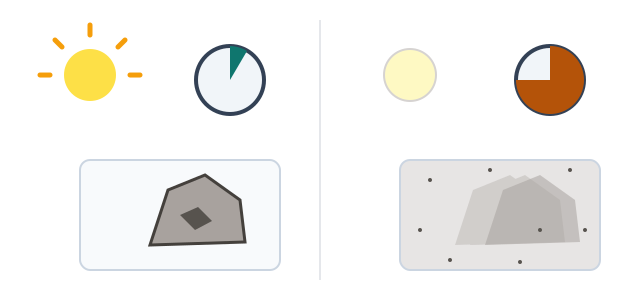
The principle
Brightness depends on three things together: how strong the light is, how long the exposure is, and how high the ISO is. When the light drops, the other two must go up.
The longer the exposure, the more any movement of your hand or the subject blurs the photo. The higher the ISO, the more noise, which hides fine detail.
Stacking takes many photos and each one must be sharp, so it is more sensitive to light than a single photo.
What to do
- Add light: move near a window, switch on a lamp, or turn on the app's fill light.
- If you cannot add light, keep the phone completely still (rest it or use a tripod) so the app can safely use longer exposures.
About fill light
Light coming straight at a shiny surface can create bright spots; changing the direction of the light usually helps.
More basics
These are the basic principles. The best way to shoot depends on you and on the subject — try a few times and you will find your own way.